12 hours
Same-day or overnight control
A practical choice when you need dough soon, have warmer conditions or want a simpler schedule with less risk of gluten weakening.
Practical pizza tips
Compare room and cold pizza dough fermentation plans without treating the clock as a guarantee.
Quick rule
For a normal home bake, start with 24 hours unless your flour, temperature or schedule makes a shorter or longer plan safer.
Room or cold fermentation
A 24 hour room-temperature dough and a 24 hour cold-fermented dough are different plans. Room fermentation moves faster near normal kitchen temperatures. Cold fermentation slows the dough down, gives more schedule control and usually needs a different yeast amount and warm-up plan.
Use the dough calculator when pizza count, hydration, yeast type or fermentation temperature matters.
Compare the options
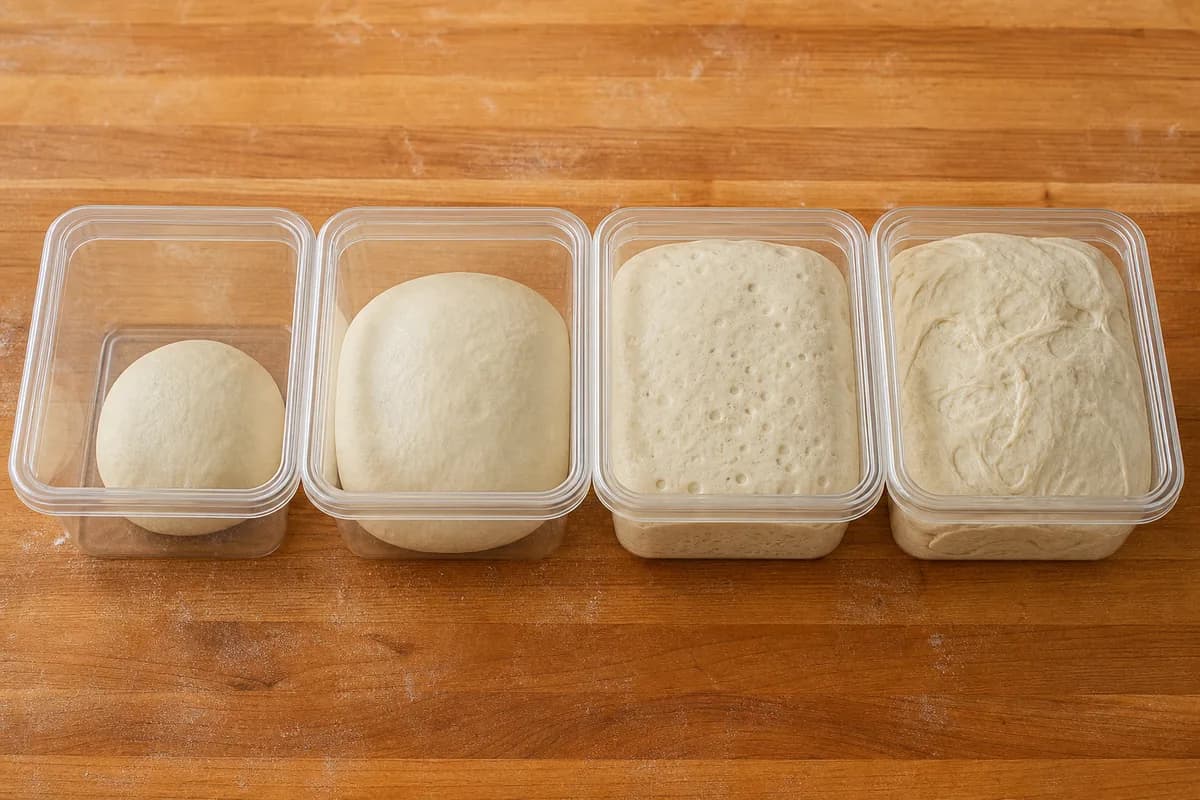
12 hours
A practical choice when you need dough soon, have warmer conditions or want a simpler schedule with less risk of gluten weakening.
24 hours
A safe starting point for many pizza plans because it gives more flavor than a short dough without demanding very strong flour.
48 hours
Useful when the dough is kept cold, the flour can handle the wait and your schedule gives the dough time to warm before baking.
72 hours
Best treated as an intentional plan for strong flour, cold storage and careful dough handling, not an automatic upgrade.
Back to tips