Best default
Choose good canned whole peeled tomatoes first. They let you control texture and keep the flavour clean.
Sauce guides
Choose a sauce style, calculate the right amount and learn how to spread it without making the pizza wet.
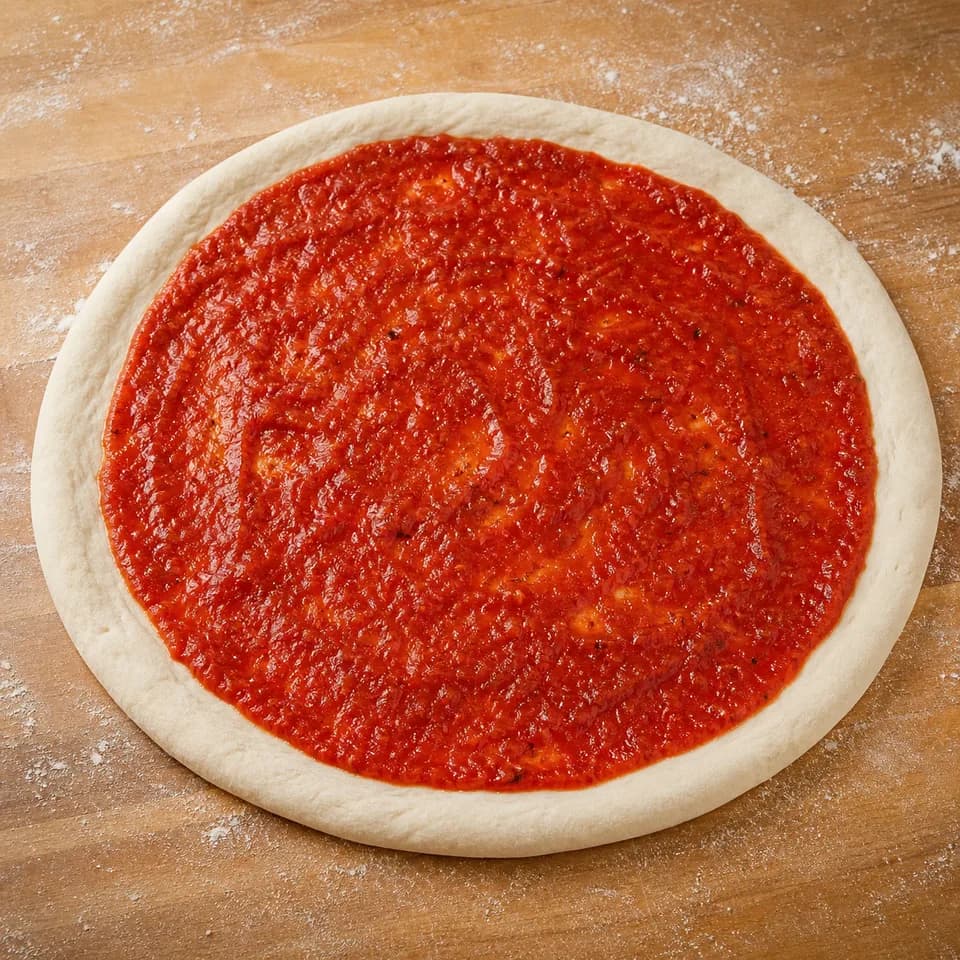
Sauce calculator and recipe
Use a simple raw tomato sauce for most pizzas. It is the safest starting point for home pizza and pizza oven baking.
Guidance mode: BeginnerRecommended for most pizzas: Classic Neapolitan · 70 g per pizza.
Calculated amount
Sauce per pizza
70 gPizzas
4Reserve
28 gPrepare
308 gChanges the total sauce required.
A starting point for one typical 30-32 cm pizza.
Coverage preset
Reference range: 0.7–1.0%.
Sauce should support the pizza, not flood it. Too much sauce can leave the center wet. Too little can make the pizza dry or unbalanced.
Too little
Dry or unbalancedRecommended
70 gRecommended balanceToo much
Wet centreStart with the recommended amount. It gives clear tomato flavour without making the pizza heavy or wet.
Wet mozzarella or wet toppings - slightly less sauce
Longer bake or dry toppings - sometimes slightly more sauce
Buy the tomatoes
Good canned whole peeled tomatoes are the easiest starting point. They provide reliable flavour and texture without requiring a complicated sauce.
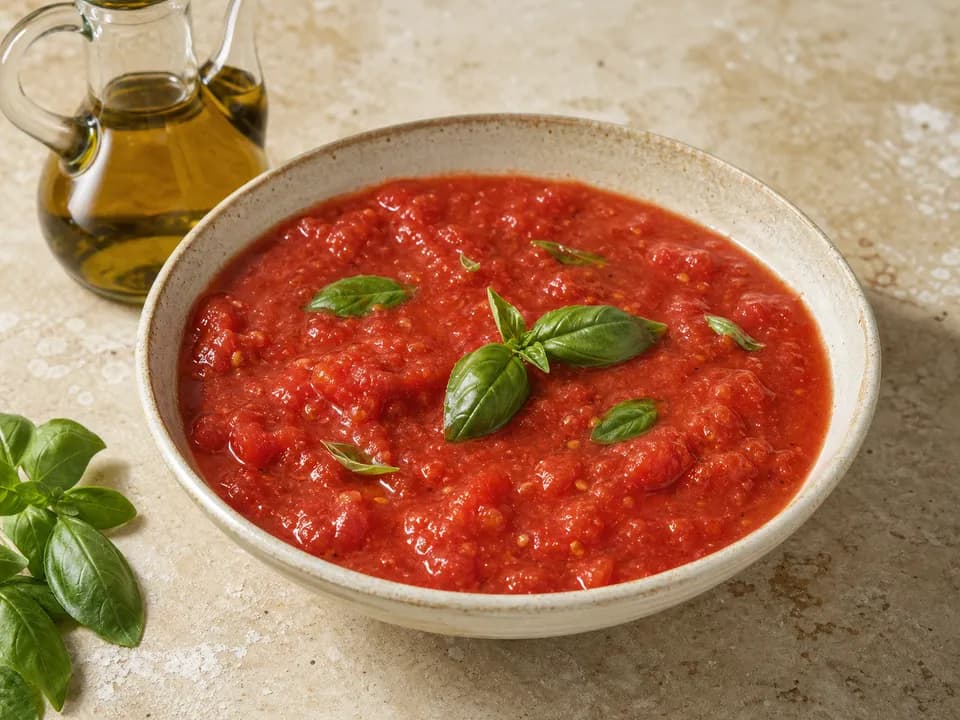
Choose good canned whole peeled tomatoes first. They let you control texture and keep the flavour clean.
Crushed tomatoes are acceptable when the ingredient list is simple and the product is not watery.
Heavily seasoned ready-made pasta sauces can make the pizza taste muddy or too sweet.
Drain only when the tomatoes are unusually watery; otherwise keep the natural tomato juice in balance.
Make and apply the sauce
Crush or blend lightly, then apply a thin, even layer. The goal is coverage, not a heavy blanket of sauce.
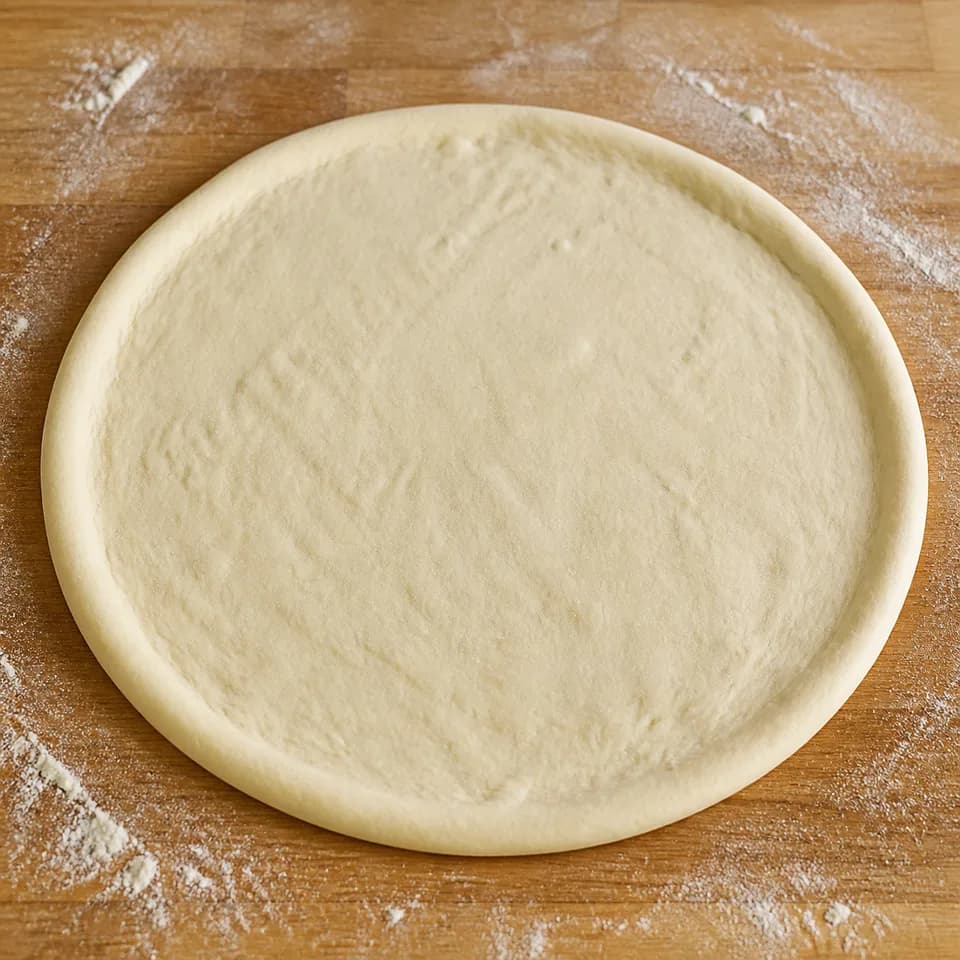 01
01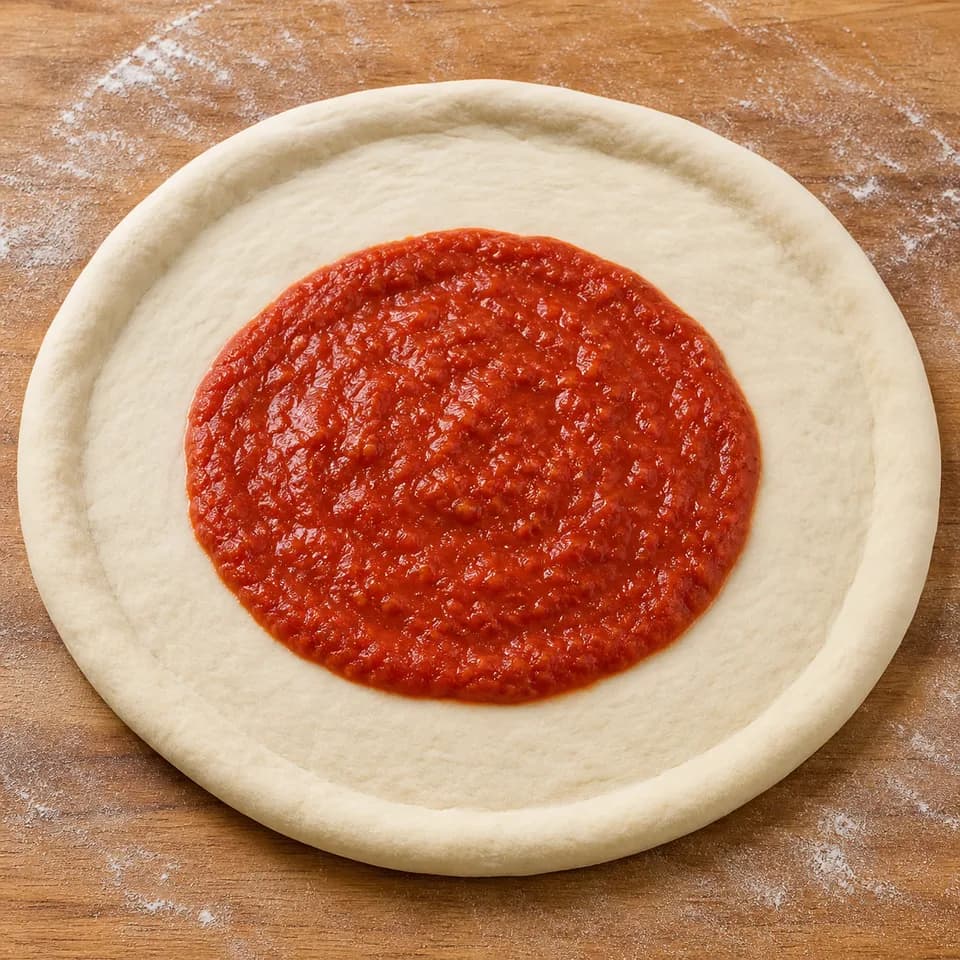 02
02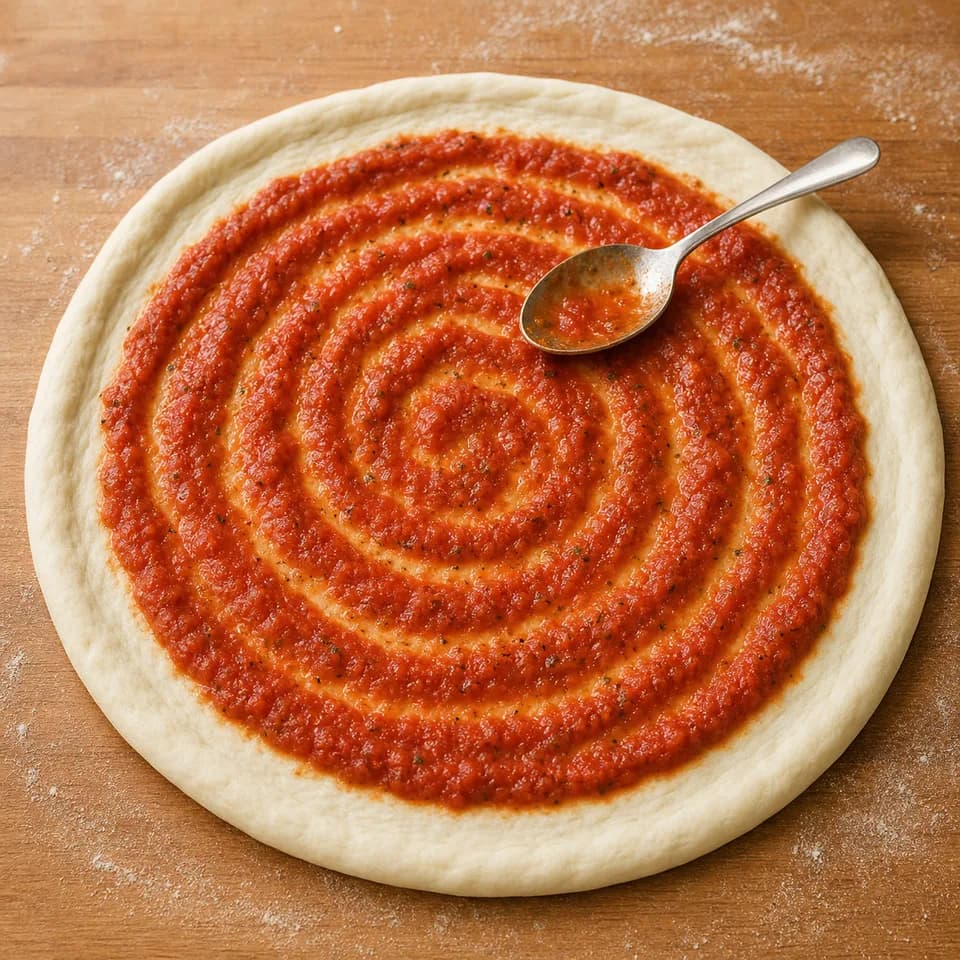 0304
0304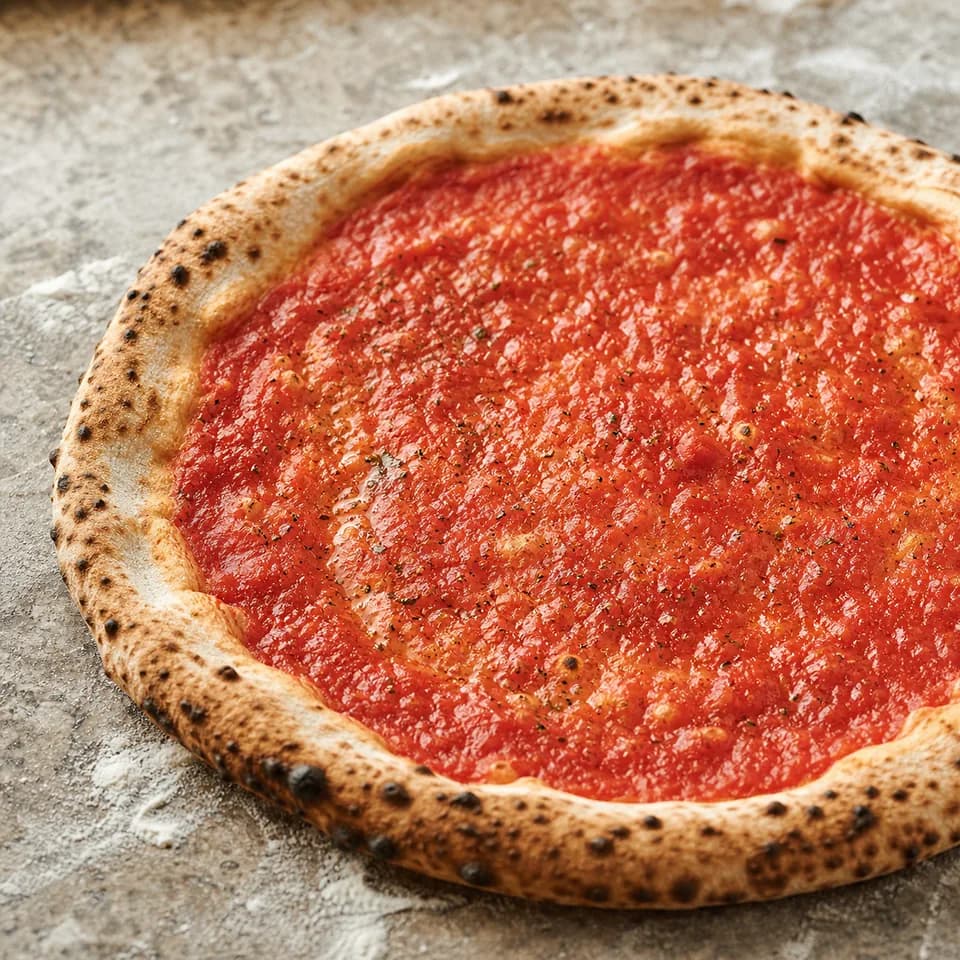
A thin, even layer covers the dough while leaving a clear crust border.
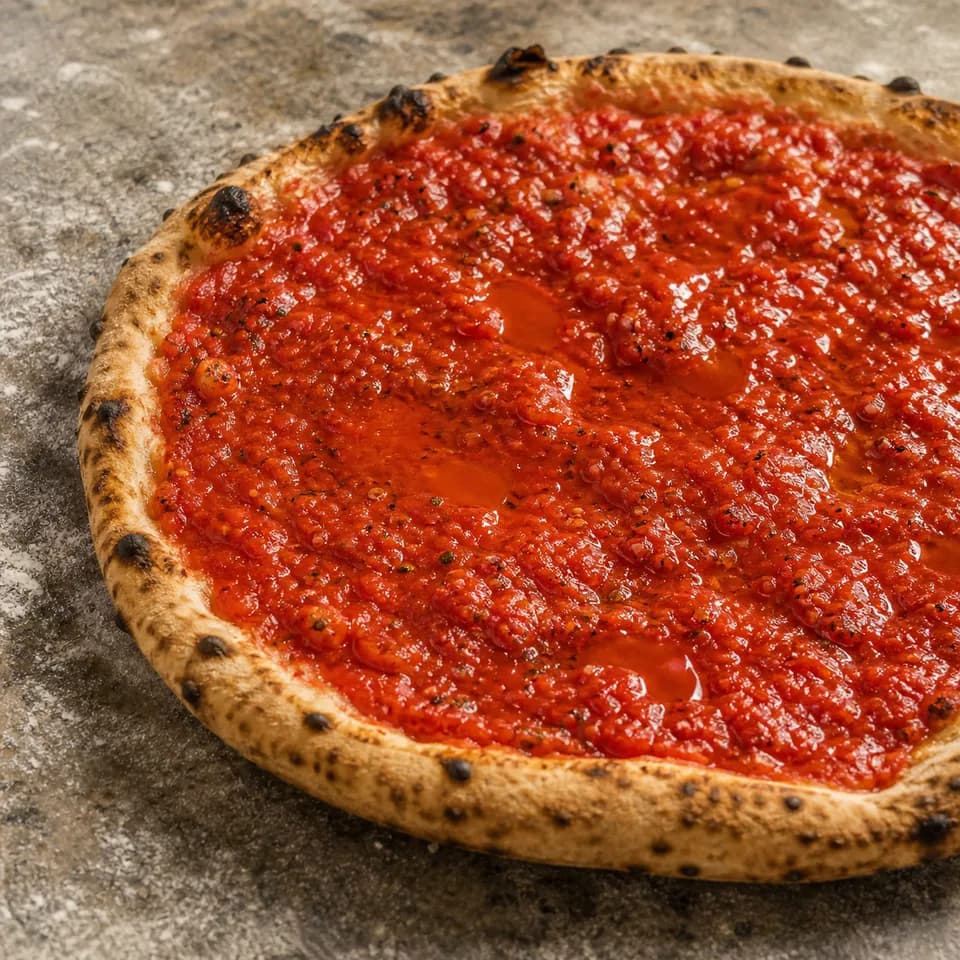
A heavy layer slows the bake, can leave the centre wet and may burn during a longer bake.
Avoid a wet or burnt pizza
If the pizza turns wet, the problem is often the total moisture load—not only the tomatoes. Sauce, cheese and toppings all release water.
Use the calculator amount first, then reduce slightly if the centre stays wet.
Drain or blot wet cheese so it does not add extra water over the sauce.
Use fewer wet toppings and keep the heaviest ingredients away from the centre.
Preheat the baking surface well and reduce the total wet load.
For longer bakes, keep the layer thinner and avoid smearing sauce onto the rim.
Direct fix
Use a little less sauce, drain wet mozzarella, keep toppings lighter and make sure the baking surface is properly hot.
Store safely
Safety guidance stays the same at every experience level: use clean storage, keep sauce cold and discard anything questionable.
Move leftover sauce into a clean covered container and refrigerate it promptly.
Freeze the sauce when longer storage is needed, and label it so you know what it is.
Throw it away if it has an unusual smell, mould, visible spoilage or an unsafe handling history.
Ready to use it?
Pizza Plan keeps the sauce, dough, toppings and bake in one practical workflow.